
How to Design Restaurant Interiors for Smooth Customer Flow
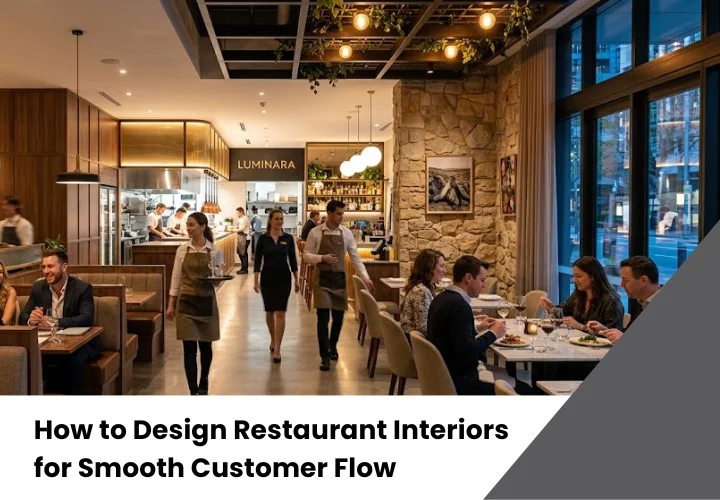
Introduction to Restaurant Interior Design for Smooth Customer Flow
Designing a restaurant involves more than just picking trendy lighting fixtures and lovely colours; it also involves considering how customers move through the area.
A well-planned interior design ensures employees can work effectively and customers are comfortable. When the flow is smooth, the path from the door to the table feels natural, and no one is running into chairs. Here in this blog, we will take you through the importance of customer flow in restaurant layout and how the right space management acts as a key to your business success.
Importance of Customer Flow in Restaurant Layout Design
The foundation of any successful business is customer flow. Before they even take a seat, customers may feel anxious if the restaurant's layout is unclear.
- First impressions: Customers are welcomed by a clear route from the entrance to the host stand.
- Staff Efficiency: Food remains hot, and service is quick when servers have easy access to the kitchen.
- Safety: Everyone can leave the area easily and safely in an emergency if the layout is clear.
- Revenue: You can seat more people without the space feeling crowded with a smooth flow.
Understanding Customer Movement Patterns in Restaurants
Understanding how customers behave is important before designing a restaurant's layout. The majority of consumers take a simple route.
- Entry
- Waiting area
- Seating
- Ordering and dining
- Exit
This organic flow can be greatly supported by the restaurant's layout design. It creates confusion when pathways are unclear or cross too frequently.
Planning Entrance and Waiting Areas Effectively
Your restaurant's entrance creates the first impression. It can be kept accessible and open if you remember the following:
- Avoid blocking the entrance.
- Keep the dining area and the waiting area apart.
- Include a separate space for people to stand or sit while they wait.
Designing Dining Areas for Easy Movement
Dining areas can be arranged to allow employees and customers to move around freely. Avoid keeping the tables too close together. Apart from these:
- Try maintaining enough space between tables.
- Keep tables away from tight spaces.
- Make sure that servers can easily access every table.
Optimising Kitchen and Service Pathways
The dining area, the kitchen, and the service area need to be seamlessly integrated so that your employees can move quickly without disturbing customers.
A well-designed restaurant layout guarantees straight lines from the kitchen to the tables.
If at all possible, provide employees with separate entry and exit routes. This reduces the chances of delays and accidents.
Role of Furniture Placement in Customer Flow
Chairs and tables can be arranged to keep pathways clear.
- Keep the furniture simple and clear.
- Try placing large furniture along the walls.
The right placement makes it easy to move and gives the area an orderly appearance.
Importance of Clear Walkways and Space Management
Walkways must be wide enough to accommodate two people. Avoid putting decor items on walkways. Also, ensure that the entrance tables and exit are all in a clear path.
- Overcrowding: The most common mistake is attempting to accommodate too many tables. It slows down service and ruins the atmosphere.
- Dead Ends: Avoid areas where customers are trapped or get confused.
- Blocking Restrooms: Ensure there is a clear, wide path to the restroom without passing through the kitchen or a private dining area.
Tips to Improve Customer Experience Through Better Layout
- Use Lighting: Dimmer lights create a relaxing atmosphere in the dining areas, while brighter lights draw attention to the path leading to the counter.
- Clear Signage: To avoid guests asking for directions, use straightforward, fashionable icons for restrooms and exits.
- Test the Path: Before you open, ask your employees to walk the floor and identify any areas where they might get stuck.
- Space management: To avoid crowding, keep busy areas like the buffet or bar away from the main entrance.
Conclusion
A well-designed restaurant layout balances between functionality and appearance. The area feels natural when the arrangement facilitates simple movement from entry to payment. In this way, customers won't be distracted and can concentrate on the food. Even a disorganised area can be made efficient and smooth with minor adjustments to the walkways and furniture.