

How Ambience Impacts Customer Experience in Restaurants
Introduction to Restaurant Ambience and Customer Perception
The restaurant experience begins when customers enter the establishment. And the first thing they feel is the ambience. Ambience refers to the overall look, feel, and mood of a place. The ambience of any space consists of various elements, including lighting, colours, music, smells, seating, and spatial arrangement. Positive first impressions arise from good ambience, which establishes customer fondness. The best restaurant design ideas create environments which make visitors feel they belong and their dining experience will be memorable.
Why Ambience Matters in the Dining Experience
Customer satisfaction depends on the ambience, which creates their dining experience yet reaches beyond meal enjoyment. The atmosphere of a space creates an extraordinary experience which transforms regular food into something exceptional. The aura of a space influences both human emotional states and the desire to eat, as well as the duration of stay.
Role of Interior Design in Restaurant Atmosphere
The design of interior spaces determines both their operational functions and the pathways customers use to navigate the establishment. Everything from wall textures to furniture design contributes to the complete environmental experience. Modern hospitality interior design trends focus on creating spaces that align with the brand story while prioritising customer retention.
How Lighting Influences Mood and Dining Comfort
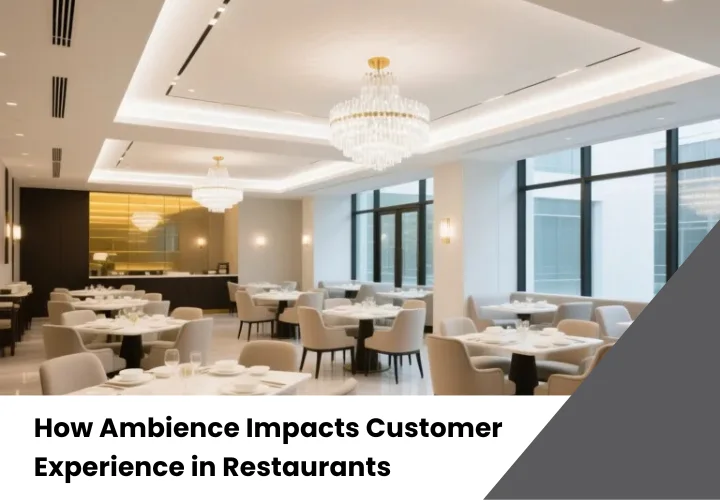
The lighting system is the main component that defines a space's atmosphere. Fast food restaurants and casual dining spaces require bright lighting because it creates an active atmosphere. Fine dining establishments should use soft, warm lighting to create a soothing atmosphere for guests. Restaurant designers should implement layered lighting systems that include ceiling, wall, and table lights to create both spatial depth and a cosy atmosphere.
Importance of Music, Aroma, and Sound Levels
The best dining experience requires the perfect balance of music, aroma and sound levels. Restaurants use soft background music to create a relaxing environment, which allows customers to enjoy their time. Good Commercial Interior Design should implement sound-control solutions that use soft materials to reduce echoes and noise. Also, the restaurant should maintain a fresh, pleasant interior aroma. Strong or mixed smells can spoil the mood, even if the food tastes good.
Seating Layout and Space Comfort for Customers
The seating arrangement determines how at ease customers will feel in the dining area. The space between tables should remain sufficient to prevent people from feeling confined. The space requires a well-designed chair, an appropriate table height, and sufficient walking space to ensure comfortable movement. Hospitality interior design trends include flexible seating solutions, which combine booths, sofas and regular chairs to match various customer requirements
Colour Themes and Their Psychological Impact
People experience emotional changes through color because it affects their feelings throughout the day. Warm colours like red, orange and yellow increase appetite and energy. People experience a sense of calm and freshness from cool colours, such as blue and green. The use of neutral shades creates a contemporary appearance. A suitable color theme is one of the best restaurant design ideas, which enables restaurants to show their brand identity and connect with customers' moods.
Creating Memorable Experiences Through Ambience
People remember a location from their emotional experience. A restaurant that's designed to perfection creates trending moments which customers will want to share. Hospitality interior design trends feature accent walls, captivating lighting, and innovative design elements to create an extraordinary experience that transforms outings into exceptional occasions.
How Good Ambience Boosts Customer Loyalty and Reviews
Pleasant restaurant environments create satisfied dining experiences. Customers who enjoy a restaurant's atmosphere will stay longer, increasing their spending and returning to the establishment. At the same time, they will be more inclined to give positive feedback and share it with others. Online restaurant reviews hold equal value to customers. Hence, restaurants can build emotional bonds with their customers through intelligent commercial interior design.
Conclusion: Designing Restaurants That Attract and Retain Customers
Establishing ambience requires more than decorative elements. It needs a full experience development. Restaurants that invest in the best restaurant design ideas and follow modern hospitality interior design trends are more likely to stand out. Through effective commercial interior design, restaurants can increase customer acquisition and enhance customer loyalty while developing a strong brand identity.