

Difference Between Commercial and Residential Interior Design
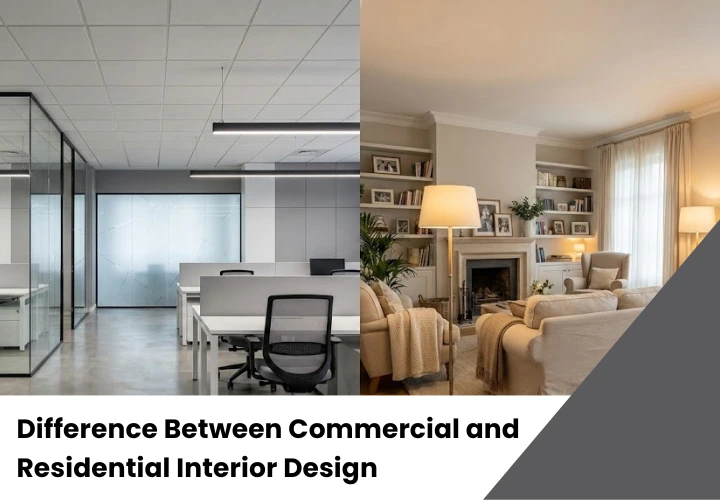
Interior design is an essential aspect of how we experience spaces. However, there are some stark differences between Commercial interior design and Residential interior design. Understanding these differences makes it much easier to select styles and products that fit your interior requirements.
Why Does Interior Design Differ Across Space Types?
Interior design is not one-size-fits-all. Each space has a distinct purpose and audience. The primary goal of residential interior design is to create a comfortable home that serves as an oasis, offering a respite from the hectic pace of everyday living. At the same time, commercial interior design focuses on assisting companies with developing brand identity and offering practical functionality.
What Is Residential Interior Design?
To fully understand what residential interior design means, we need to know its purpose, style preference and personalisation.
- Purpose: Residential or home interior design is about creating spaces for people to live comfortably and fully express themselves as individuals. It emphasises relaxation, family gatherings and lifestyle requirements.
- Style Preference: Home interior design offers a broad spectrum of styles tailored to each homeowner's unique taste and lifestyle. Some examples of home design styles include minimalist, traditional, rustic, modern, etc.
- Personalisation: Homes reflect the people who live in them. Therefore, designers frequently use personal items, distinctive colour schemes, and custom-built furnishings to evoke emotions.
What Is Commercial Interior Design?
The concept of commercial interior design is very different from that of home interior design; let's explore how commercial interior design supports a brand's and a company's goals.
- Purpose: Commercial interior design primarily focuses on improving business productivity, attracting customers to the company’s products and services, and building a positive perception of the brand.
- Business Goals: Commercial interior design is centred on operational efficiency, maximising workspace utilisation, and enhancing customer engagement through functionality.
- Branding and Functionality: Commercial interior design creates visual representations of a company's brand through the use of colours, materials, signage and layouts.
Key Differences: Commercial vs Residential Interior Design
| Aspects | Commercial Interior Design | Residential Interior Design |
|---|---|---|
| Purpose and Functionality | Business operations, customer experience | Comfort, personal living space |
| Space Planning & Layout | Efficient workflow, public access | Cosy, private, flexible layouts |
| Design Aesthetic and Style | Brand-centric, professional look | Personalised, varied, comfort-focused |
| Material Selection & Durability | High durability, low maintenance | Comfortable, aesthetic, varied durability |
| Lighting Requirement | Task and ambient lighting for productivity | Warm, ambient, mood-enhancing lighting |
| Furniture & Fixtures | Functional, robust, often modular | Stylish, comfortable, personalised |
| Safety Codes & Compliance | Strict adherence to ADA, fire codes, etc. | Less strict building and safety codes |
| Technology Integration | Advanced tech: security, HVAC, automation | Smart home devices, entertainment systems |
User Experience: Homes vs. Commercial Spaces
In a residential environment, the user experience revolves around a person's comfort with an emphasis on emotional well-being. In commercial spaces, the user experience depends on workplace efficiency, accessibility, and customers' or clients' perceptions of the space
Cost Differences in Commercial vs Residential Interiors
Commercial interiors usually have larger budget requests because they require a greater quantity of materials designed for high use. The installation of technology within these spaces, as well as compliance with codes, regulations, and ordinances, also comes at a cost. On the other hand, residential interiors can either be made affordably or expensively based on a client's preference.
Project Timelines & Execution Differences
Commercial interiors typically have more stringent time constraints based on their operational hours. Therefore, most business interiors use phased construction to minimise disruption. However, domestic interiors have less restrictive time constraints, allowing for a quicker turnaround on most projects, unless significant changes are being made.
The Role of Branding in Commercial Interior Design
Branding is a critical element within commercial design. It is primarily because the purpose of an entrepreneurial interior is to create a physical representation of a company's values and identity through visual and spatial elements. Therefore, interior designers collaborate with the marketing team to establish the appropriate design elements that convey a consistent brand message.
Interior Designers’ Skill Requirements for Both Sectors
Interior Designers working in the commercial space need to be familiar with businesses' needs, regulations, and how to implement technical systems. Similarly, those who work in residential design primarily focus on the client’s personal tastes, culture and developing intimate spaces. While both types of designers have different work styles and processes, they both require creative thinking, technical expertise and practical communication skills with clients.
Examples of Residential vs Commercial Interior Applications
- Residential: Design a welcoming family living room, create a custom bedroom, and develop a functional kitchen.
- Commercial: Create an environment that promotes collaboration within a corporate office, develop a layout for a retail store based on how products will be displayed, and create an atmosphere that makes customers feel comfortable and relaxed.
Choosing the Right Interior Designer for Your Needs
While residential interior designers transform the client's lifestyle needs into a personal environment, commercial interior designers focus on functional elements and brand identity. Since residential and commercial interior design vary, it is essential to select the right designer who specialises in the style of the project you are working on. Our designers at Tharani Infra are well-versed in both domestic and commercial interior design. Our creative team not only focuses on superior aesthetic and functional design, but they also offer customised design solutions for all needs. Get a quote today.